

As a private practice clinician, marketing can often be one of the most overwhelming things for you to do. Oftentimes, you simply have the heart to serve your clients and you don’t want to spend hours on Canva trying to perfect the most engaging Instagram carousel. But the thing is, private practice marketing isn’t optional. In order to get new clients, they have to know you exist… right? Right!
But what is optional are the platforms that you choose to market on. Most of the time when people think of marketing, they automatically think of the most popular social media platforms. And while it’s true that social media can be very effective for attracting new leads and landing clients, it’s not the end all be all.
There are plenty of other platforms for you to choose from when it comes to your private practice marketing, so if you’re tired of trying to lip sync for a reel, you have no interest in doing a silly dance, and your eyes feel crossed from trying to create the cutest post, this is good news for you!
You don’t have to market only on social media. In fact, there are 5 top overlooked private practice marketing platforms that we would argue are actually MORE important for you to show up on as a clinician.
5 Overlooked (Yet Highly Impactful) Private Practice Marketing Platforms
If you’re tired of spending all of your time creating content for Instagram or other social media platforms and are ready to diversify your private practice marketing platforms, this list is for you!
SEO Blogging
Starting off strong with your own website! If you’ve yet to implement SEO blogging for your private practice marketing, you’re missing out on a huge chance to be found in search results for your industry.
Writing blogs targeted to your ideal clients allows you to educate your audience, answer their questions, and demonstrate your expertise. With that, SEO (search engine optimization) ensures that your content ranks on Google for keywords your potential clients are searching for.
For example, a therapist might write a blog titled “How to Manage Anxiety During the Holidays,” while a dietitian could focus on “Healthy Meal Planning Tips for Busy Moms.”
The absolute best part of focusing on SEO blogging for your private practice marketing is that the effort put into this content compounds over time. A single SEO-optimized blog post can continue attracting traffic to your website months (or even years!) after it’s published.
That’s simply the nature of blog content… but you can’t say the same for social media! Those posts often die off days (or worse, even hours) after they’ve been posted, meaning all of the time and effort pouring into creating that perfect post vanishes for little to no one to ever see again.
By integrating SEO blogging into your private practice marketing strategy, you’re creating a long-term resource that builds trust with your audience and drives new clients to your practice!
And if you don’t know how to get started with SEO blogging for your private practice, Studio Adagio is here to help with just that – we build SEO strategies for therapists, dietitians, and wellness professionals, because we know what your clients are searching for and how to get your site to show up when they do!
Our SEO services are designed for every stage of growth, whether you want the roadmap or someone to drive the whole process for you – CLICK HERE to see which option would be the best fit for you.
Google Business
Next, it’s incredibly important for private practice clinicians to leverage Google Business, especially if you’re serving clients locally. If you’re unfamiliar, Google Business is a free tool that anyone can use and if you have any type of physical storefront or office, it’s highly recommended to have your profile setup!
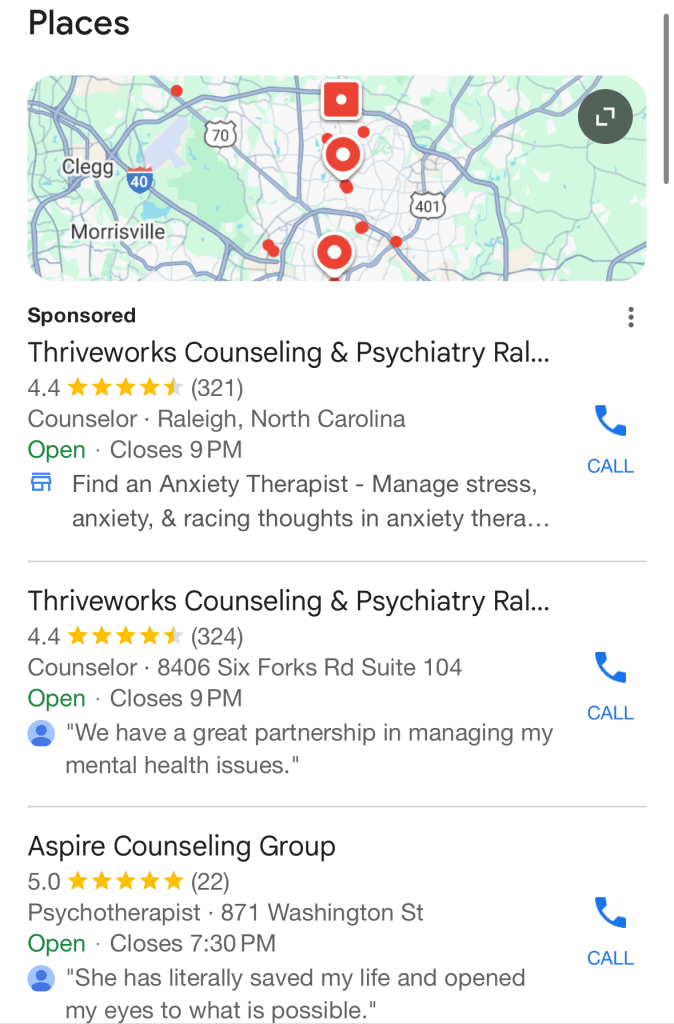
Your Google Business listing is often the first thing people see when they search for your industry’s services in their area and having a well-optimized listing ensures that your practice shows up in local searches, like “therapist near me” or “dietitian in [city].”
To maximize the impact of your Google Business Profile, make sure it includes:
- Accurate business name, address, and phone number (consistent with your website)
- Business hours and service details
- A link to your website and booking page
- High-quality images of you, your team, and your office (if applicable)
- Regular updates, posts, and responses to reviews
To really increase the impact of your Google Business Profile, encourage satisfied clients to leave reviews (without violating any ethical or HIPAA guidelines) as this can boost your credibility and ranking in local searches.
Overall, having a Google Business Profile is one of the easiest, free, and effective ways to improve your local SEO and market your private practice in a way that’s incredibly low lift.
When you think of Pinterest, you probably think of decorating ideas, recipes for your next family meal, or a step-by-step guide for that DIY project you’ve set your mind to. But Pinterest is so much more, especially for private practice clinicians.
While your work may not seem “visual” at first glance compared to an interior designer or a fashion brand, it’s important to realize that the platform thrives on educational graphics, wellness tips, and inspirational content, all of which align perfectly with the services you provide.
In between their searches for “fall home decor” or “easy weeknight meal for a family of 4,” your ideal client might also be searching for “wellness tips for a busy mom,” “how to manage anxiety naturally,” or “healthy snack ideas for picky eaters.”
And YOUR content has the chance to show up if you’re leveraging Pinterest for your private practice marketing! By creating pins that link back to your resources, tips, or services, you’re giving potential clients a way to discover your practice organically.
For example, a therapist might pin “5 Coping Strategies for Anxiety,” or a dietitian could pin “Quick Meal Prep Ideas for Busy Parents,” both of which point back to blog posts or resources on your website, allowing the reader to not only dive into that specific content, but also discover who you are, what you do, and how you could potentially help them!
Email Marketing
Similar to SEO blogging for your private practice, email marketing is another low-pressure way to connect with your audience and speak directly to people who have already raised their hand to hear from you.
What I mean by that is when someone follows you on social media, that’s great, but you essentially become just another account fighting for attention in a never-ending scroll. The algorithm decides who sees your posts (and who doesn’t), and even your most loyal followers might miss your updates entirely.
Email marketing, on the other hand, puts you directly in your audience’s inbox – no fighting for who gets to see what. When someone subscribes to your email list, they’re saying, “Hey! I actually want to hear from you.” which should be seen as an open invitation for you to send them value-packed updates, resources, and stories that help them see how you can support them.
The beauty of email marketing is that you can tailor your messages to their specific needs and your specific goals for your private practice.
For example, if you know your audience is currently focused on working on their mental health goals, you can curate email content around that while also announcing an open spot in your schedule or promoting a new service.
And when done consistently, your emails will keep you top of mind so that when they (or someone they know) are ready for the services you provide, you’re the first person they think of!
Podcasting or YouTube Videos
Lastly, audio and video content, in the form of podcasting or YouTube content, is sometimes overlooked by private practice owners because it can often feel intimidating to create. However, podcasting and YouTube videos are powerful private practice marketing platforms that allow you to showcase your personality and expertise in a more personal way.
Podcasts and videos help build trust with your audience, making them feel like they already know you before they book a session. Topics could range from mental health tips, nutrition advice, or client success stories (always respecting confidentiality, of course).
Even short, educational videos or clips can make a big impact when shared on multiple platforms. The key with either of these platforms, however, is consistency. Whether it’s weekly, bi-weekly, or monthly, showing up regularly for your audience builds familiarity, credibility, and ultimately, leads to more clients.
Additional Private Practice Marketing Resources
At the end of the day, private practice marketing doesn’t have to rely solely on social media. By leveraging other platforms, you can diversify your reach, attract more clients, and grow your practice sustainably.
The best part is that when these platforms are used together, they create a multi-channel marketing approach that positions your private practice as a trusted resource in your field!
If you’re in search of additional private practice marketing resources, Studio Adagio has you covered: