


The start of a new year often brings fresh motivation for private practice owners to improve their online visibility, attract better-fit clients, and create more sustainable growth. And for many clinicians, that’s when SEO – search engine optimization – starts creeping back onto the priority list.
But when you start to dabble in the world of SEO, you might feel unsure where to begin, overwhelmed by conflicting advice, or frustrated by the idea of “playing the Google game.”
And even as SEO strategists ourselves, we even know that feeling all too well. But we’re ultimately here to say that SEO for private practices doesn’t have to be complicated or intimidating.
When approached strategically, it becomes one of the most reliable ways to help the right people find you, without relying solely on referrals or social media.
So to help you enter the new year feeling clear and confident about how to kickstart your SEO strategy in a way that feels manageable and aligned with your practice goals, this blog post serves as a guide to help you do just that!
Why SEO for Private Practices Matters
Before we dive into the strategy talk of it all, it’s first important to fully understand why SEO for private practices even matters. Because after all – if you don’t understand the why behind something, you’re less likely to really commit to it, right?!
If you’re unfamiliar with SEO, it’s simply the process of improving your website so it shows up when potential clients search for services you offer. For private practices, this is especially important because most people begin their care journey with a Google search.
Whether someone is looking for a therapist, dietitian, or wellness provider, they’re often searching with intent – meaning they’re actively seeking support, not just browsing. SEO helps your practice appear at the exact moment someone is ready to take the next step.
Beyond boosting your visibility, SEO also supports your credibility as a private practice owner. A well-optimized website signals professionalism, trust, and authority before a potential client ever reaches out.
Unlike short-term marketing tactics, SEO compounds over time, meaning the work you do now can continue bringing in inquiries months (and even years) down the line.
And if you don’t believe us, then do yourself a favor and read how our client’s refined SEO strategy helps her bring in 70+ inquiries per month – meaning she has a booked out practice just from her website alone!
How to Create an SEO Strategy for Your Private Practice in 2026
Now that you know why SEO for private practices matters, let’s get into how you can create your SEO strategy for the new year to start boosting your visibility and getting your practice found by those who really need it.
Evaluate Your Current SEO Foundation
Before you even create an SEO strategy for your private practice, it’s important to have a clear picture of what your current SEO foundation looks like.
This is a big thing that a lot of people often want to skip – they want to jump straight into doing more of what they think the right things are, but the reality is that you can’t know what needs your attention without first having clarity around what already exists.
Getting clarity around your current SEO foundation really just involves asking a few simple questions, like:
- Is your website up to date and easy to navigate?
- Are you already receiving inquiries through your site?
- Do you know which pages or blog posts get the most traffic?
- Are you currently ranking for any keywords? (A keyword research tool can help you answer this! Our favorite is SEMrush, but there are lots of options out there.)
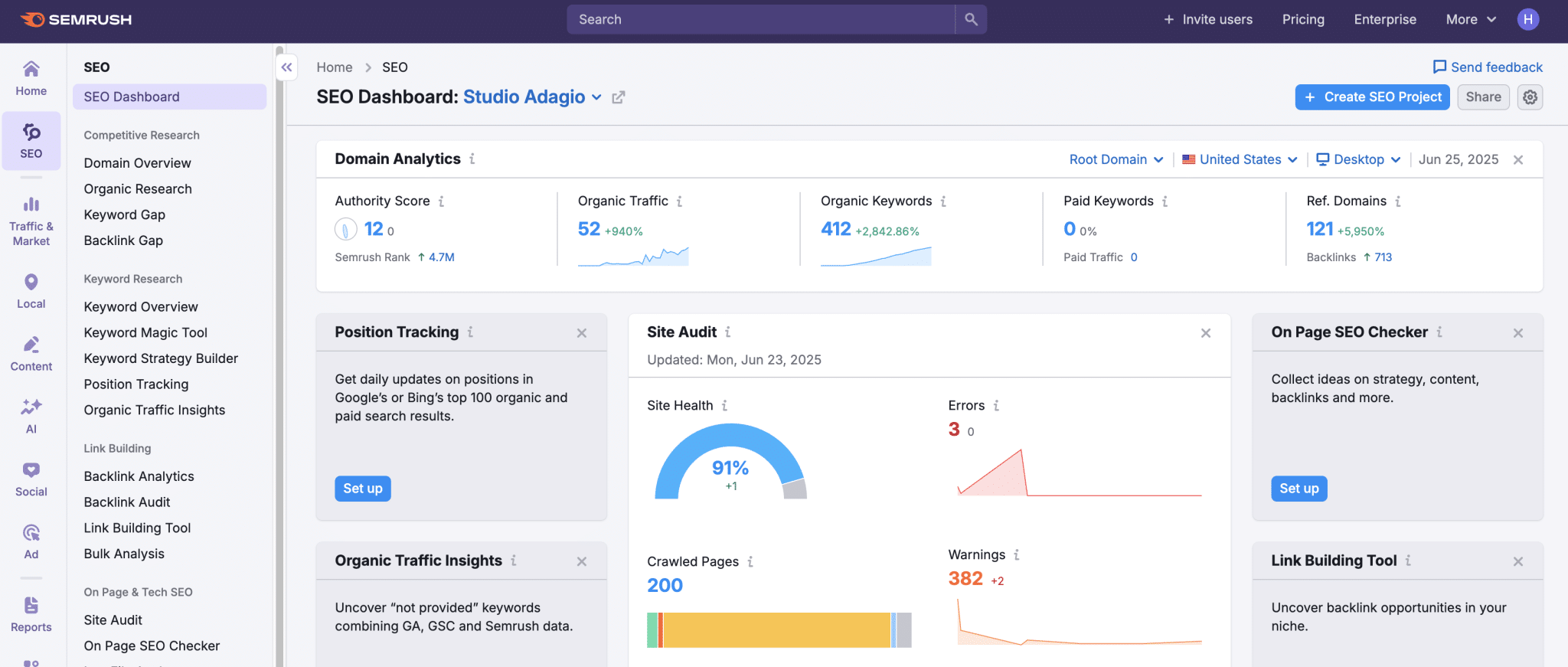
This step isn’t about making you feel bad about your current SEO status, but rather make you aware of what’s currently happening so that you can make informed decisions and take the best next steps instead of guessing about what to do.
Clarify Who You’re Trying to Reach (and What They’re Searching For)
Once you have a clear understanding of your current SEO foundation, it’s important to get extremely clear on who you’re trying to reach – aka your ideal client – and dig into what they’re really searching for.
The keyword there is “really.” A lot of times as a private practice owner, you might think your ideal client is searching for one thing when they’re really searching for something totally different.
For example, you might think your ideal client is searching for something like, “licensed therapist accepting new clients,” but they might actually be searching for something like, “why do I feel anxious all the time” or “how to stop emotional eating.”
That’s where using a proper SEO tool comes in handy! These tools will help you discover the words and phrases that people are actually searching for when trying to find a private practice.
In addition to using SEO tools, you can also draw from real conversations that you have with clients. If you’ve been in practice for a while, you likely already know the types of questions clients ask during sessions, consultations, or inquiries. Those questions are often the same ones they’re typing into Google.
If you’re newer to practice, that’s okay too. Start by thinking about the problems your services solve and the outcomes clients are hoping for.
Overall, understanding this search behavior helps you create content that meets clients where they are, not just where you want them to be.
Build a Keyword Strategy That Supports Your Services
Once you have clarity around who you’re trying to reach and what they’re searching for, it’s time to build your keyword strategy that supports your services overall.
Keywords are simply the phrases people type into search engines and they act as the bridge between your website and your audience. A strong keyword strategy helps ensure your content aligns with what people are actually searching for.
As a private practice owner, it’s important that your website features a combination of service-based keywords (like “trauma therapist in Austin” or “nutrition counseling for PCOS”) and educational keywords that answer common questions.
What’s important to know here, however, is that the goal isn’t to rank for everything. In fact, trying to target too many keywords at once often leads to unfocused content and can actually confuse Google and cause negative results.
Instead, choose a handful of strategic keywords that reflect your services, location, and expertise and build your content around them intentionally.
If you’re new to the whole keyword research thing when it comes to SEO, click here for a checklist that will help you out!
Create Website Content That Works for You Year-Round
A lot of times people think that a website serves the sole purpose of looking professional, providing info on your services, and giving people an easy way to contact you.
And while it’s true that your private practice website should serve those purposes, your website should also actively support your SEO goals. This means that you shouldn’t just leave your SEO results up to your blog posts or other educational content on your website.
Your core pages, including your home page, services page, and contact page should all include appropriate keywords that help search engines understand your site.
Clear headings, thoughtful copy, and a logical structure on all of these pages make it easier for both users and search engines to navigate your website. This is where SEO and website design work together, because a beautiful site that’s confusing or vague won’t convert visitors into clients, no matter how much traffic it gets.
And that’s exactly why we offer BOTH types of services for private practices here at Studio Adagio. Our website design services paired with our SEO services will help make sure that you’re checking both boxes!
Use Blogging to Support Long-Term SEO Growth
If there’s one major thing to know about SEO, it’s that it’s not a one time thing. Your website’s visibility is something that you should be constantly working on because getting your practice found is one thing… but getting it consistently found is another.
One of the most powerful ways to support your SEO growth long-term is blogging, yet it’s often underutilized or misunderstood. Blogging for your private practice allows you to answer questions, build trust, and expand your website beyond just service pages.
Consistent blog content helps search engines see your website as active and relevant. Over time, blog posts can rank for a wide range of searches, bringing in people who may not be ready to inquire yet, but may be eventually!
If you aren’t sure what you should be blogging about for your private practice, our SEO Blog Boost service gives you a content plan built on SEO strategy without having to research or guess what works.
Focus on Local SEO and Visibility
In addition to using appropriate keywords throughout your website and consistently blogging to help boost your practice’s visibility, it’s also important that you consider implementing local SEO practices.
Local SEO is the process of improving your online visibility so that people in your area can find your services more easily. Unlike general SEO, which focuses on reaching anyone searching for a topic or service, local SEO zeroes in on the clients who are physically near you.
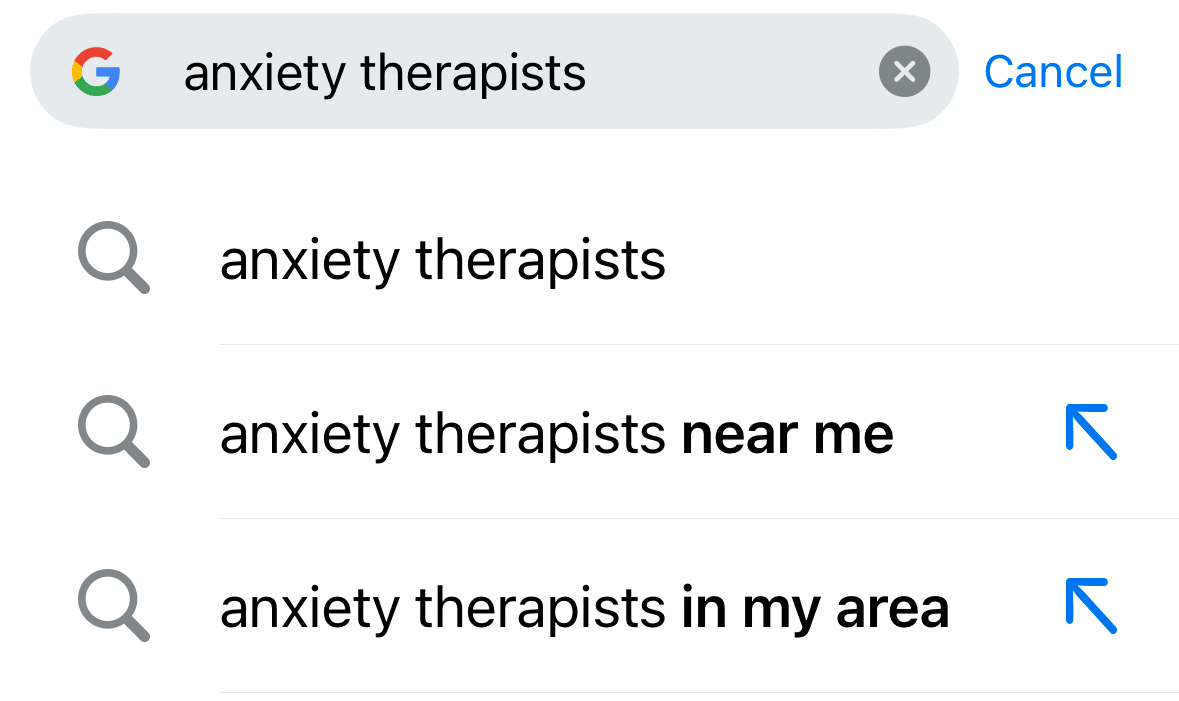
So if you serve clients in-person, focusing on local SEO is essential! But even if you offer virtual services, people often search with location-based terms so it’s important to make sure those are incorporated into your content as well.
For a deeper dive on how to attract nearby clients using local SEO, click here!
Set Realistic SEO Goals for the New Year
Lastly, if you’re looking to really prioritize SEO for your private practice in the new year, it’s important to set realistic goals and not rush the process.
SEO is a long-term strategy, which means success isn’t measured overnight. Instead of focusing only on rankings, consider metrics like increased website traffic, more aligned inquiries, or better conversion rates.
And our biggest tip is to not try to overhaul everything all at once. Make a priority list and work from that!
For you, maybe you want to optimize all of your website pages before you jump into SEO blogging. Or maybe your website feels good, but you know you need to incorporate more local SEO practices, like optimizing your Google Business profile, or starting new local marketing strategies.
The point is that you approach SEO as laying a foundation for your practice that will truly support everything that comes after it.
It takes patience. It takes consistency. But when you do it with real strategy in mind, it’s SO worth it!
And if you aren’t exactly sure where to focus first for your private practice marketing as a whole for 2026, we created a quiz to help you out!
SEO Services for Private Practice Owners
Overall, the new year is a powerful time to reset, refocus, and build systems that support long-term growth and choosing to prioritize SEO for your private practice in 2026 is a decision that can bring many benefits well beyond this year.
With a clear strategy and consistent effort, it can become one of the most effective tools for growing your private practice without you having to feel glued to marketing 24/7.
Instead, your website can start to work harder for you, but that can’t successfully happen without refining your SEO strategy and making sure that your website and your content reflects that!
If you aren’t sure where to start or simply need a roadmap to help you kickstart your SEO strategy in the new year, here at Studio Adagio, we’ve got you covered. Our SEO services for private practice owners are designed for every stage of growth – whether you simply want the roadmap or would rather someone drive the whole process for you.
We have three different SEO service options that you can choose from and they’re all tailored to helping private practice clinicians finally start showing up in search!