

Trying to learn SEO as a business owner often feels like the chemistry class in high school that you’re required to take, yet never have any actual clue what’s going on. There’s acronyms, metrics, “best practices”, and whole SEO glossary of terms that get tossed around that you may find yourself questioning if learning SEO is really worth it after all.
As SEO strategists, even we find that there’s so much talk out there around the topic that does feel overwhelming and confusing, so it’s no wonder that business owners continue to put it off.
But here at Studio Adagio, we want you to know that SEO does not have to feel intimidating. Instead, we want SEO to feel fun and exciting for you. And though that may sound weird, trust us it’s completely possible!
And the good news is that you don’t have to become an SEO expert to make that happen. By simply knowing and understanding key SEO terms, you can make better decisions, ask smarter questions, and feel more confident whether you’re DIYing your SEO or working with a professional.
So this blog post is going to serve as just that – an SEO glossary of terms for beginners – in plain language – so you can understand what’s happening behind the scenes and how it impacts your business!
Why Understanding Basic SEO Terms Matters as a Business Owner
Before actually diving into the SEO glossary of terms, let’s get on the same page of why understanding these terms even matters in the first place!
To put it most simply, without fully understanding the basics surrounding SEO, it’s easy to feel disconnected from the process or unsure whether your efforts are actually working.
Prioritizing SEO is truly one of the most effective ways to get your business in front of people who are actively searching for what you offer, but without a basic understanding of what’s all involved, you could potentially do all of this work with little return.
Understanding the following SEO glossary of terms will help you:
✔️ Make informed decisions about where to invest your time and money
✔️ Evaluate SEO services without feeling confused or pressured
✔️ Collaborate more effectively with marketing professionals
✔️ Understand reports, rankings, and recommendations
✔️ Build realistic expectations around timelines and results
Overall, SEO works best when strategy and implementation are aligned and that alignment starts with clarity!
SEO Glossary of Terms for Beginners
To make things easier for you to digest, we’ve broken this SEO glossary of terms into two categories: research-focused terms (aka the planning and strategy side) and application-focused terms (aka how SEO is implemented on your website).
SEO Glossary of Terms for Research & Strategy
These terms help define what you should be optimizing for and why.
- SEO (Search Engine Optimization)
This one feels like the most obvious place to start! What is SEO anyway?!
SEO stands for search engine optimization and is the process of optimizing your website so it appears in search engine results when people search for relevant topics or services.
SEO matters because it helps you attract organic (meaning non-paid) traffic from people already looking for what you offer.
- Keyword
When you hear any talk around SEO, you’ll undoubtedly hear the word “keyword” tossed around.
This simply refers to a word or phrase people are actually typing into search engines. Keywords guide your content strategy by helping you align your website with real search behavior.
This is why proper keyword research is such an important part of a successful SEO strategy!
- Primary Keyword
When it comes to keywords, every page of your website (including every blog post) should have a primary keyword that you’re targeting. This helps search engines understand the primary topic of that page.
You can have additional or secondary keywords throughout your content, but the primary keyword is most important!
- Search Volume
As you’re conducting keyword research, 3 of the most important things to pay attention to are: search intent, search volume, and competition (aka keyword difficulty).
Let’s start with search volume! This refers to the average number of times a keyword is searched per month. Volume helps you gauge demand and decide which topics are worth targeting.
Typically, we advise clients to target keywords that have a mid to high search volume with a fairly easy keyword difficulty as this will give you a better chance at actually starting to rank for that keyword instead of having to fight search positions with the big guys!
- Search Intent
Next, let’s talk about search intent. This is exactly what it sounds like – it’s the reason behind a search.
Sometimes people are searching for a keyword or phrase with the intent of finding information – that’s where your blog content can come into play. Other times, they are searching with the intent to find a service or make a purchase – this is where your website pages come into play.
Understanding search intent ensures your content matches what the searcher actually wants instead of just guessing.
- Competition (Keyword Difficulty)
Then comes the keyword difficulty. Sometimes referred to as “competition” in SEO resource tools, this simply means how hard it is to rank for a specific keyword.
High competition keywords often require more authority and stronger SEO foundations, which is why it’s super important to pay attention to this.
Again, we typically recommend that clients look for keywords with lower difficulty to give them a better chance of ranking!
- SERP (Search Engine Results Page)
If you’re using an SEO research tool (our favorite is SEMrush!), you’ll likely see the acronym “SERP” and this is the page of results shown after someone performs a search.
Your goal with SEO is to appear as high as possible on the SERP!
- SERP Position
When working to optimize your website through SEO practices, it’s important to pay attention to your SERP position, which means where your website appears on the search results page.
Higher positions typically lead to more visibility and clicks!
SEO Glossary of Terms for Application & Optimization
These terms relate to how SEO strategy is applied to your website and content.
- SEO Audit
If you’re just starting out with SEO for your business, one of the best places to start is to conduct an SEO audit, which is essentially just a comprehensive review of your website’s SEO health.
An SEO audit will identify gaps, opportunities, and technical issues impacting your site’s performance. When working with an SEO professional, this is likely one of the first things they’ll do for you!
- On-Page SEO
On-page SEO refers to the elements that you directly control on your website, such as content, headings, titles, and internal links – all of these things help search engines better understand all of the pages on your website, so let’s dig into those a bit further 👇🏼
- SEO Title (Title Tag)
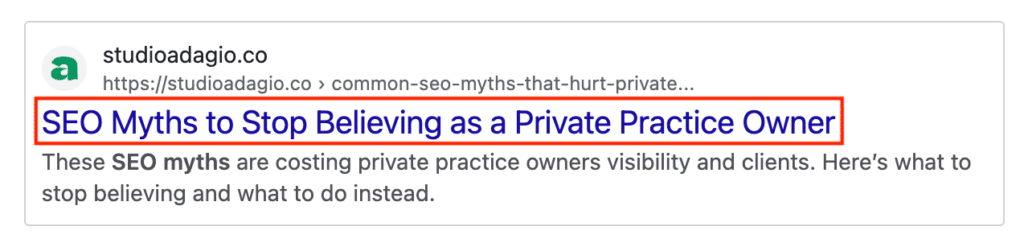
An SEO title is the clickable headline that appears in search results and should include your primary keyword and entice users to click.
- Meta Description
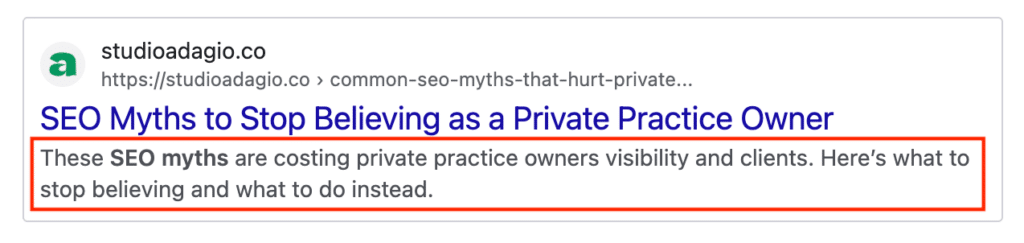
A meta description is a short summary shown beneath the SEO title in search results. While it doesn’t directly impact rankings, it plays a big role in click-through rates.
- H1, H2, H3 Headings
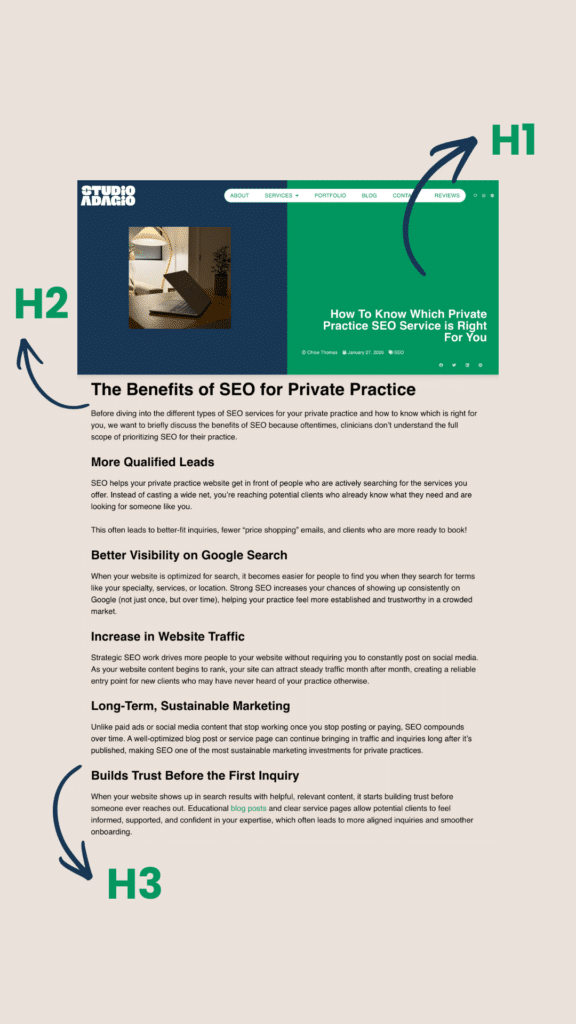
When uploading any content to your website, including blog posts, it’s important that you apply the correct HTML heading tags that structure your content. Proper heading structure improves readability and helps search engines understand page hierarchy.
Here’s an example of what this looks like in a blog post:
- URL Slug
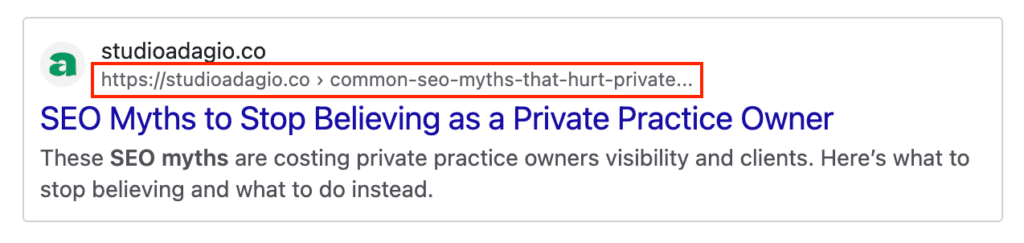
A URL slug is the part of a URL that comes after the domain name. Clean, keyword-focused slugs improve clarity for both users and search engines.
- Internal Links
Internal links are links that connect one page of your website to another and this is something that should be done very strategically! Internal linking improves your site navigation and helps distribute SEO authority.
- Backlinks
In addition to internal linking, another huge boost for your SEO are backlinks, which simply mean links from other websites that point back to yours. Backlinks act as credibility signals and can strengthen your website’s authority.
Some low-lift ways to gain backlinks include:
✔️ guest blogging
✔️ local directories and professional associations
✔️ podcast features or interviews
✔️ collaborations and referrals
- Technical SEO
In addition to on-page SEO, there’s technical SEO, which refers to backend website elements that impact performance, such as site speed, mobile usability, and indexing.
Technical SEO ensures search engines can properly crawl your site and is where you’ll want to ensure you have certain tools set up, like Google Analytics and Google Search Console.
- Indexing
Speaking of indexing, this is the process where search engines store and organize your website pages. If a page isn’t indexed, it won’t appear in search results.
- Local SEO
At Studio Adagio, we primarily serve private practice clinicians, so local SEO is a huge topic we focus on, since many private practices have a heavy local client base.
Local SEO is focused on ranking in location-based searches and includes optimizing your Google Business Profile and local keywords.
- Google Business Profile
One of the best ways to improve your local SEO as a service-based business is by utilizing Google Business Profile, which is a free listing that helps your business appear in local search results and Google Maps.
SEO Services for Small Businesses
Understanding this SEO glossary of terms is a powerful first step, but knowing how to apply them strategically is where real results happen!
SEO isn’t about checking boxes or chasing trends. It’s about building a sustainable foundation that attracts the right audience, supports your business goals, and grows over time. For many business owners, that means deciding how hands-on they want to be.
Whether you’re just getting started with SEO or ready to scale your visibility, working with a professional SEO team can save time, eliminate guesswork, and ensure your strategy is aligned with your goals.
At Studio Adagio, we help small businesses implement SEO strategies that actually make sense – from keyword research and content planning to technical optimization and long-term growth.
If you’re ready for clarity, confidence, and results from your SEO efforts, we’d love to support you – CLICK HERE to learn more about Studio Adagio’s SEO services!