


When it comes to designing your website for your therapy practice, you probably have a vision in mind that involves pretty branding, cute photos, and colors that convey a calming environment for your potential clients. And while all of those things can be great things for your therapist website design, there’s a few essential features that shouldn’t be overlooked in order to turn your website visitors into booking clients.
Your website is often the first impression that a potential client gets of your practice, but the look of it alone won’t be the thing that gets them to click “book now.” Your website should create a sense of trust, safety, and connection while guiding visitors to the next step.
So if your website isn’t converting like you think it should, it may simply be that you’re lacking some strategy in the design, so keep reading for 5 key features that every therapist website needs!
5 Essential Therapist Website Design Features To Book More Clients
Home Page with Clear Headlines
Your website Home page is like your virtual waiting room that sets the tone for what visitors can expect when working with you. Within just a few seconds, potential clients should understand who you help, how you help, and what makes your approach different.
Too often, however, we see therapists jumping right into their professional background and portfolio on their Home page and while we understand you want to convey your expertise and authority in your space, that’s not the main goal of your Home page. (Save that for your About page!)
Your website Home page is 90% about THEM – your potential client – and how you can help them.
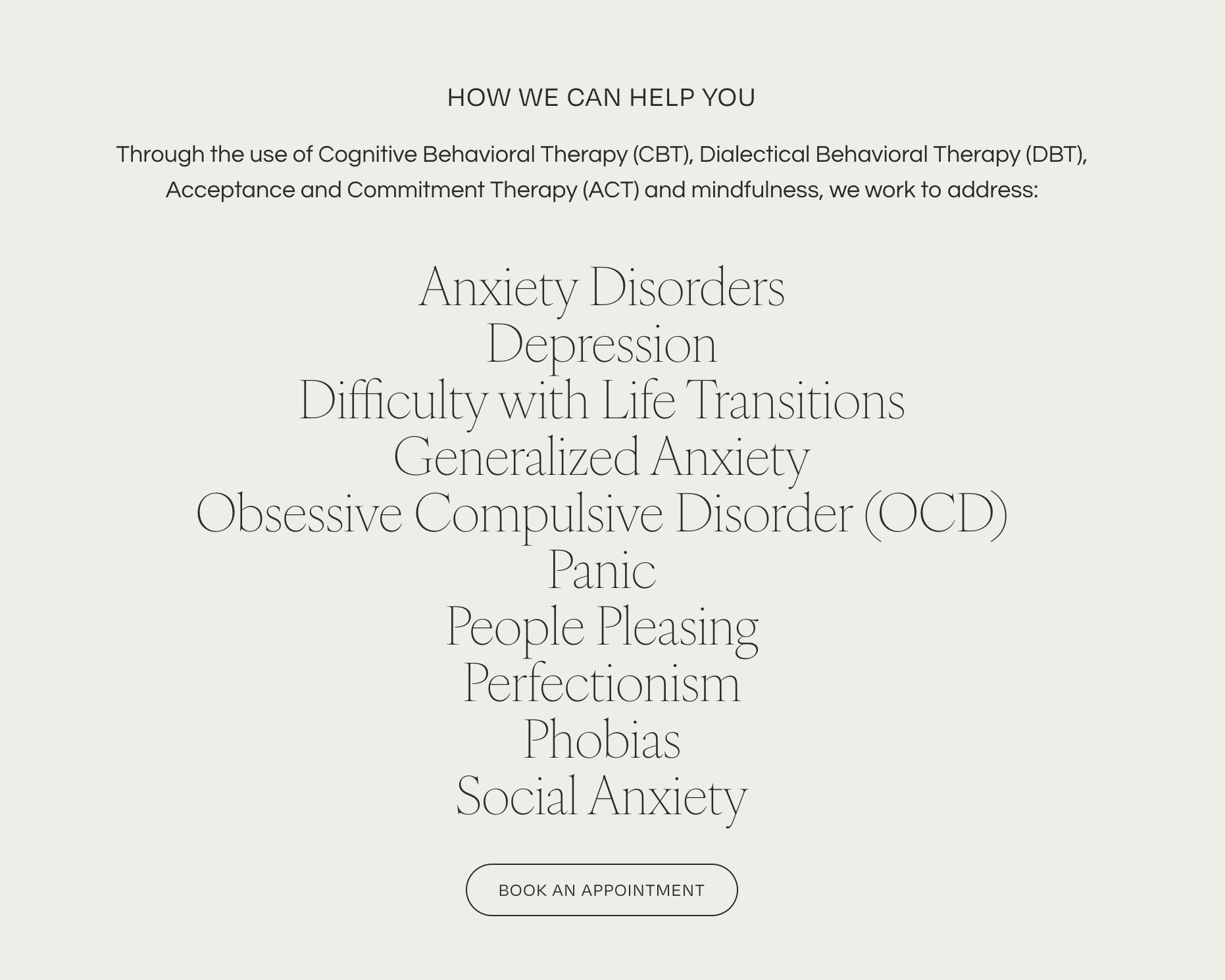
When designing the Home page of your therapy website, include a:
✔️ Clear and welcoming headline
And no, we don’t mean something like “Welcome to Our Practice!” Instead, lead with something that addresses your potential client’s specific concerns so that it grabs their attention and keeps them on your website to learn more.
For example, if you’re a therapist who supports women navigating anxiety and burnout, your headline might be something like:
“Helping Women Move From Overwhelm to Inner Calm” or if you specialize in motherhood transitions, you might write, “Supporting Women Through the Shifts of Motherhood, Identity, and Self-Discovery.”
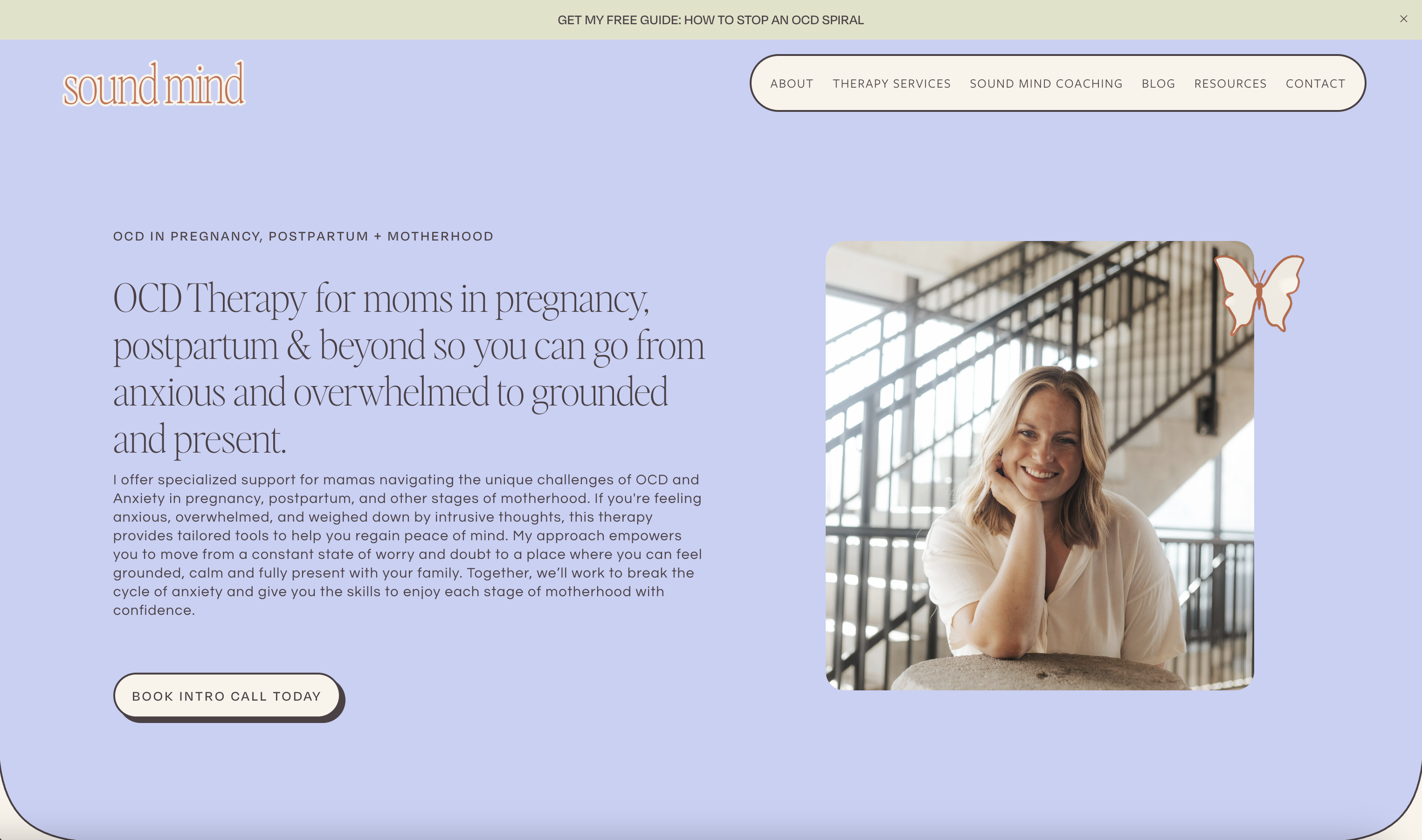
✔️ Brief introduction to you and your specialties
Remember, the Home page should be 90% about your potential client, but there is a time and place to talk about you. For this page of your website, keep it brief!
Introduce yourself so they know who you are and briefly talk about your specialties so they can easily determine if they’re in the right place.
For example, you could say something like “serving women navigating anxiety and self-doubt” or “helping women reconnect with themselves and find peace in their daily lives.”
Other examples could include:
- “supporting new moms managing postpartum anxiety and overwhelm.”
- “helping women in high-stress careers rediscover balance and confidence.”
- “guiding women through life transitions with compassion and clarity.”
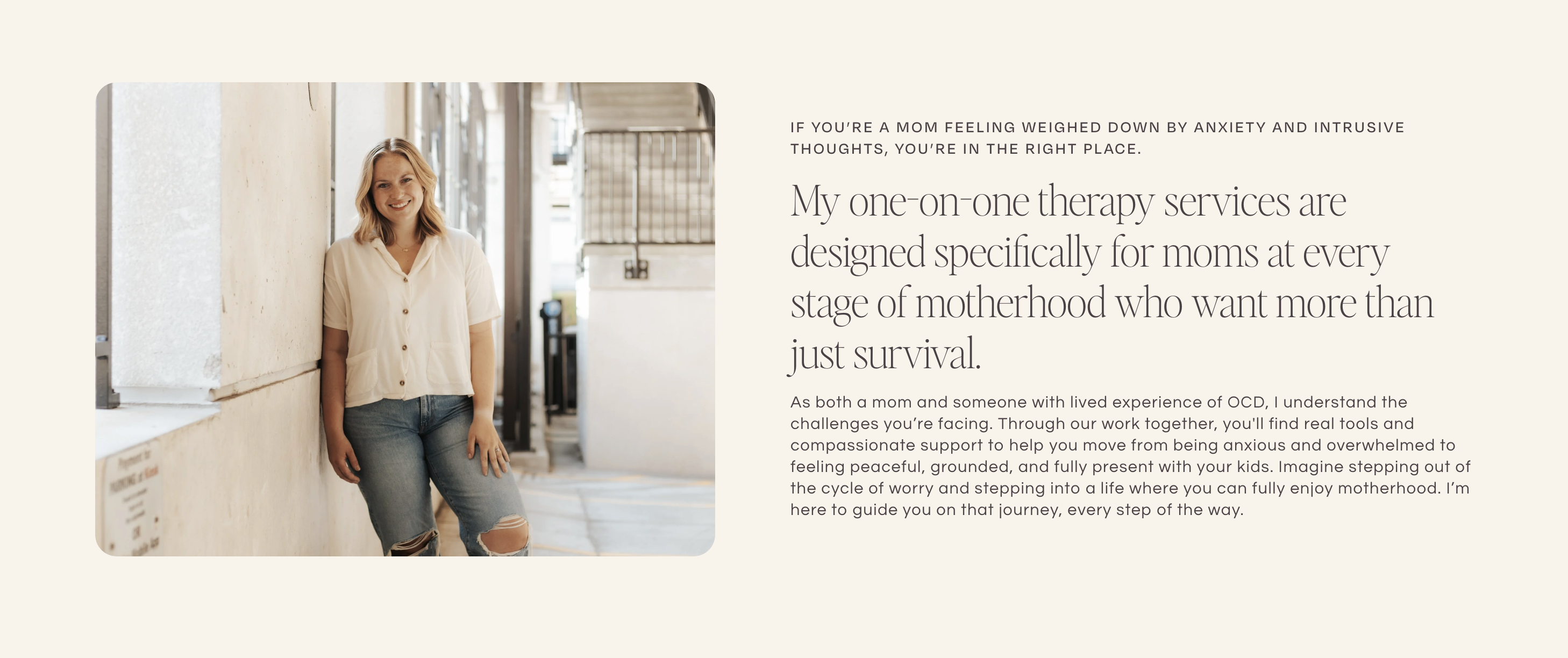
✔️ Clear call-to-action
When someone enters your home for the first time, you don’t leave them guessing on what to do or where to go, do you? Instead you tell them where they can hang their coat or purse, where the bathroom is, and you invite them in to sit on your couch or in the dining room.
The same concept applies to your website. You never want to leave your website visitors guessing on what to do next. Give them clear actions to take throughout your Home page by including buttons with verbiage like, “Book a Consultation” or “Get in Touch.”
Detailed Services Page
Next up, every therapist website design needs to include a detailed services page – and the keyword there is detailed!
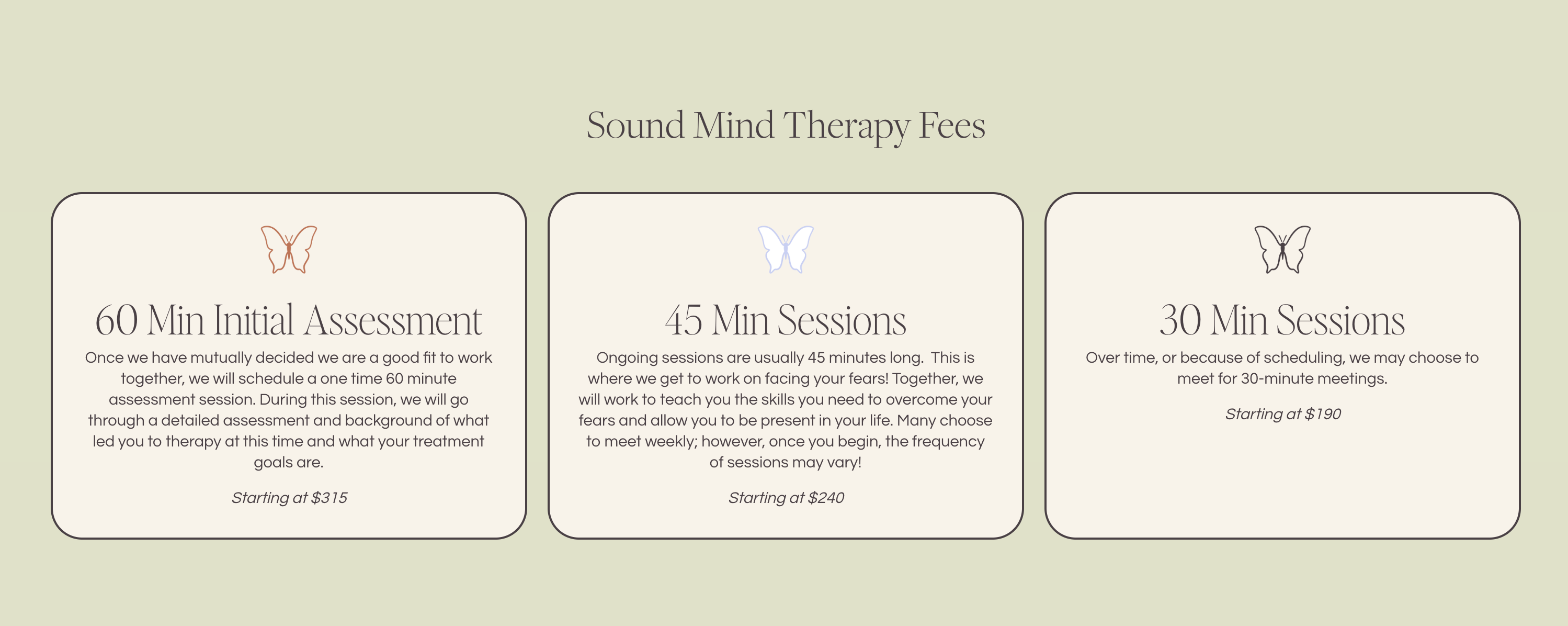
Your Services page should do more than just list your offers. Instead, help your potential clients understand how you can support them through your services and why you’re the right fit.
When designing your Services page, break down your offers into clear sections and use language your clients would use themselves! For example, instead of “Individual Psychotherapy,” you might write “Therapy for Anxiety and Overwhelm.”
The last thing you want to do is confuse your potential clients by using jargon and terms they don’t understand, so when talking about your services on your website, get into the head of your ideal client and write to THEM.
Additionally, for each service be sure to include:
- A brief description of what the service entails
- Common reasons clients seek support in this area
- What clients can expect from sessions with you
- A call-to-action linking to your contact page or scheduling form
The overall goal with your Services page is to remove uncertainty and help your website visitors picture themselves working with you so that they feel confident actually reaching out for more information.
Testimonials and Reviews
Therapy is a deeply personal choice and it’s something that often feels very vulnerable when someone decides they want to seek out therapy services. Because of this, trust plays a huge role in whether someone decides to contact you.
For this reason, including testimonials and reviews (even if anonymized or general in nature) adds credibility and helps potential clients feel reassured. These can be short, simple statements from past clients or even feedback from colleagues.
Due to HIPPA laws, however, most therapists and mental health professionals have certain rules you have to follow when it comes to sharing client testimonials.
Typically it’s prohibited that you solicit or display testimonials from clients on your website, so instead you may opt for anonymized case studies on your blog, professional endorsements, and have “self select” Google reviews as an option for clients to use if they so choose.
Blog and Resources
Speaking of a blog, one of the best things you can do for your therapy website design is to include educational content and resources that potential clients can browse and consume before deciding to work with you.
While a blog might not seem like a conversion tool at first, it’s one of the best therapy marketing strategies and an incredibly powerful way to build trust and authority online – both of which are incredibly important for therapists.
Here’s why: when people search for help, they often start with questions and your blog gives you the chance to answer them before they ever reach out!
An active therapist blog filled with relevant, empathetic content also helps improve your SEO (search engine optimization) because Google prioritizes websites that provide helpful, high-quality information, and consistent blogging can help you show up in local search results for terms like “anxiety therapist near me” or “couples therapy in [your city].”
Contact Page with Simple Steps
Lastly, and maybe most importantly, your therapist website design should include a dedicated contact page that includes simple steps for your website visitors to take. While it’s true that every page on your website should include call-to-actions, which often lead people to contact you, you still need to have a page that’s specifically for this.
Your Contact page should be short and simple and include only the essential fields (name, email, and message) and make your next steps clear. You might write something like:
“Once you fill out the form, I’ll respond within 24–48 hours with available consultation times.”
This helps set expectations and makes your client process feel approachable!
It’s also wise to include alternative contact options like your email address or a scheduling link, and if you offer virtual therapy, make that clear here too!
Ready for a Therapist Website Design That Connects and Converts?
So there ya have it! The 5 key features that every therapist website design needs to convert website visitors into booking clients.
If you’re reading this and know that your therapy website needs some help, you’re in the right place. At Studio Adagio, we specialize in therapist website design that is both beautiful and functional.
To do this, we combine branding, copywriting and SEO designed specifically for therapists and other private practice clinicians.
These services can help your therapy practice:
- Stand out in a crowded field
- Build trust with potential clients
- Grow your private practice with purpose
When you’re ready to take the leap, apply to be a client!